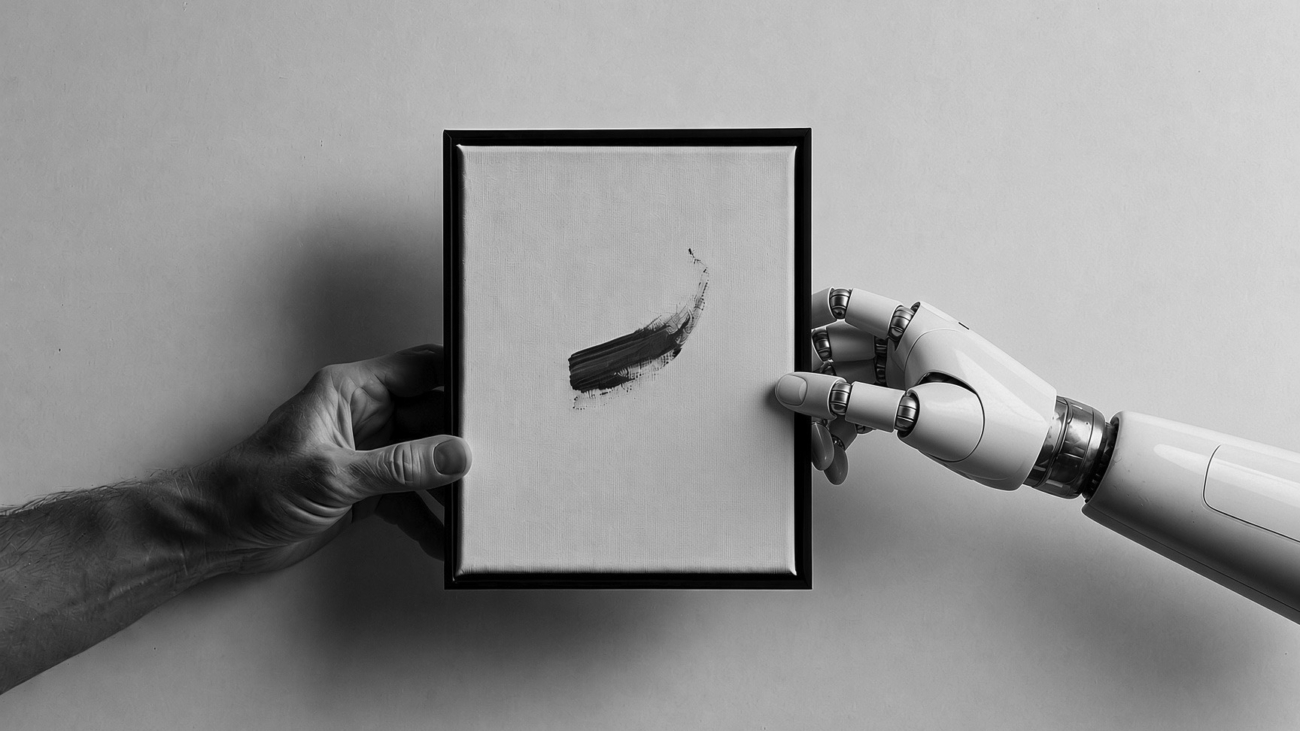
Businesses now use artificial intelligence to produce reports, marketing copy, designs, software code and research in minutes. The practical question, which few ask until a dispute arises or the business is being sold, is who owns what comes back, and whether anyone owns it at all.
Can an AI System Own What It Produces?
Under UAE law it cannot, because only a person can hold rights and the law recognises two kinds of person, natural and legal. Legal persons are listed in Federal Decree-Law No. 25 of 2025 on Civil Transactions (the “Civil Transactions Law”): the State and public bodies, companies, endowments, associations and foundations, and “any group of persons or property to which legal personality is granted by virtue of the law”. No law grants that personality to an AI system.
Federal Decree-Law No. 38 of 2021 on Copyright and Neighbouring Rights (the “Copyright Law”) is built on the same footing. It defines an author as “a person who creates a Work” and a person as “a natural or legal person”. An AI system has no personality, so it can be neither the author nor the owner of its output, and it has nothing to transfer to anyone else.
An AI system has no personality, so it can be neither the author nor the owner of its output, and it has nothing to transfer to anyone else.
Is AI Simply a Tool?
In law, an AI system is a thing and not a person. The Copyright Law lists “smart applications, software and software applications” among the Works it protects, which makes the system something that is owned rather than something that owns.
Calling AI a tool does not settle who owns its output, however. A pen or a word processor leaves every creative choice to the writer, whereas an AI system makes many of those choices itself. What matters is how much of the finished work came from the person using it.
How Is AI Output Classified, and Who Owns It?
The Copyright Law does not mention AI, so the answer depends on its ordinary rules and on the circumstances in which the output was produced.
A person creates and AI assistsWhere a person uses AI as they would use any other software, for example to research, edit, translate or refine their own material, and the creative expression remains theirs, the result is a Work and that person is its author.
The work is made for someone elseUnless otherwise agreed in writing, where an author creates a work in favour of another person, the copyright is attributed to that person. Where an employee creates a work related to the employer’s business, or uses the employer’s tools, information or materials to create it, the economic rights are attributed to the employer. An employee who uses AI at work is in the same position as one who uses any other tool, although these rules still require a human author to begin with.
AI produces the output with little or no human contributionThis is where the law is silent, as protection does not cover “ideas, procedures, work techniques”, and choosing a topic or typing a short instruction is therefore unlikely, on its own, to make a person the author of what the system then writes. Output of this kind may have no author and therefore no copyright owner, which would leave the business that paid for it unable to stop others from copying it. We are not aware of any published UAE judgment or official guidance that says where the line falls.
NOTE: One further rule matters in practice. The Copyright Law treats the person whose name appears on a work as its author “unless otherwise established”. Putting your name on AI-assisted work therefore gives you a starting point, but it is one that can be displaced by evidence that the work was not yours.
How Have Courts Elsewhere Answered?
Leading decisions abroad have required a human being. In December 2023 the UK Supreme Court held that an inventor must be a natural person, so that an AI system could not be named as the inventor on a patent application. In the United States, a federal appeals court held in March 2025 that copyright requires a human author, and in March 2026 the Supreme Court declined to review that decision. These rulings do not bind the UAE courts, but they point in the same direction as the wording of the Copyright Law.
What Should Businesses Do?
Keep a record of the human contributionDrafts, edits and the choices made in selecting and arranging the material are the evidence of authorship if ownership is ever challenged.
Settle ownership in writingEmployment contracts, consultancy agreements and agency terms should say who owns work produced with AI, because the default rules can only be changed by written agreement.
Read the AI provider’s termsThey often deal with who may use the output. A contract binds only its parties, however, and it cannot create copyright where the law recognises none.
Register what mattersRegistration is not a condition of protection, but the Ministry of Economy’s register serves as a reference for the details and ownership of a work.
Why Is an International Framework Needed?
AI is cloud-based and cross-border by nature. Output can be created in one country, on a system hosted in a second, and exploited in a third, and each of those countries may give a different answer to the question of ownership.
In our view, national laws cannot resolve this on their own. What is needed is an international treaty or framework agreement, concluded under the auspices of the United Nations and the relevant international bodies, which sets common standards on the legal status of AI systems, the ownership of what they produce and the rights and obligations of those who deal with them, and which states then incorporate into their national legislation. Until that happens, the safest course is to make sure that a person, and a written agreement, stand behind every piece of work that matters to your business.
The safest course is to make sure that a person, and a written agreement, stand behind every piece of work that matters to your business.
We assist with all intellectual property matters, including the ownership of AI-assisted work, the employment, consultancy and commissioning terms that secure it, and copyright registration with the Ministry of Economy.
Khalid Abdel Wahab is a Founder & Senior Advocate at Al Midfa & Associates.
At Al Midfa & Associates, we offer comprehensive services tailored to meet your needs, ensuring that your rights are protected at every step of the way. Please feel free to contact us.
Add a Comment